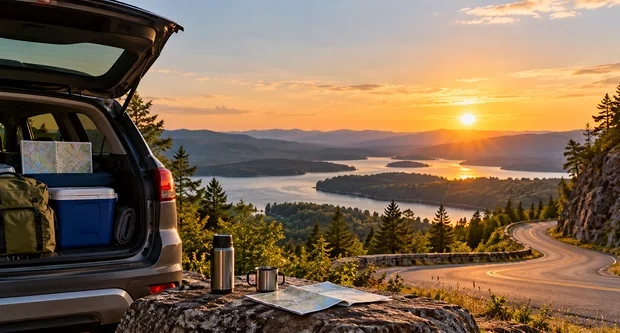
Question: How do you plan a road trip on a budget?
A road trip can be one of the cheapest ways to travel, or a surprisingly expensive one. The difference is almost always planning. Four costs make up nearly every road trip budget: where you sleep, what you eat, the fuel, and the extras along the way. Plan each one before you leave and the trip costs what you expected.
Start with a total and a daily figure
Decide what the whole trip can cost, then divide it by the number of days. A daily figure is easier to stick to than a total, because you can check it every evening. Keep about 10% aside for things that go wrong, such as a flat tire, a closed road or a night you did not plan to stay.
Plan the route around your budget
The route sets most of your costs. Fewer miles mean less fuel and less time, so pick a loop rather than an out-and-back where you can, and group the places you want to see so you are not crossing the same ground twice. Driving days of four to six hours leave time to stop without paying for an extra night. Check for toll roads and park entry fees too. A national parks annual pass, for example, pays for itself after a few visits.
Lodging: the biggest variable
For most trips, nights cost more than anything else. Campgrounds are the cheapest option where the weather allows, and many state parks have cabins for a fraction of a hotel price. Motels just outside a town are usually cheaper than those in the center or beside a famous sight. Booking the busy nights, such as weekends and anywhere near a big attraction, in advance and leaving the quiet ones flexible gives you a good balance of price and freedom.
Food without eating out three times a day
Eating every meal in restaurants can double a budget. Pack a cooler with breakfast items, lunch and drinks, restock at grocery stores rather than gas stations, and make one meal a day the one you eat out. A picnic at a viewpoint is often better than a roadside diner anyway.
Fuel: know the number before you go
Fuel is the one cost you can predict almost exactly. All it takes is the distance, your car’s highway MPG and the price of gas, and a minute to estimate the gas cost of your route turns a guess into a line in your budget. Once you have it, a few habits keep it there: fill up away from interstate exits where prices are higher, keep your speed steady, and pack light.
If several people are traveling, split fuel by the trip rather than by the fill-up, so nobody ends up paying for the expensive tank in the mountains.
Get the car ready
A breakdown is the most expensive surprise a road trip can bring. Before you leave, check the tires, oil, coolant, wipers and lights, and make sure the spare or inflation kit is usable. If a service is nearly due, do it at home, where you know the prices, rather than in a town you are passing through.
Small extras that add up
Parking, souvenirs, attraction tickets and coffee stops are easy to forget and easy to overspend on. Look up parking and entry prices for the main stops ahead of time, check for free days at museums and parks, and give the extras their own small line in the daily budget.
Summary
A budget road trip comes down to four planned costs: lodging, food, fuel and extras, plus a reserve for the unexpected. Build the route around them, book the busy nights early and work out the fuel before you leave. Then the trip is about the places, not the bill.